.png)


Growth Hacking Explained; Its importance, techniques, and 10 benefits for small business.
- Kevin Vejo

- Nov 27, 2020
- 5 min read
Updated: Jan 13, 2021
You might or not have some form of marketing strategy in place for growing your business, and, although it's true that slow and steady usually wins the race, a little kickstart doesn't hurt anyone.
And that’s why today, I am going to explain to you about Growth Hacking and its importance in 2020.
Is it just another buzzword? How does it affect digital marketing? What is the actual meaning of growth hacker?
By the end of this post you will have learned:
1. WHAT IS GROWTH HACKING?
Growth hacking is a data-driven methodology for gathering smart marketing techniques. With small marketing budgets, start-up founders and small businesses had to come up with creative new ways to expand their companies rapidly and at a reduced expense. According to the Digital Marketing Institute, Sean Ellis, CEO of TheGrowthHackers has stated the following: “As a growth hacker, every strategy you execute, every tool you implement and every technique you develop should be informed by your desire for growth. It might seem self-evident that the singular goal of growth hacking is growth, but the beauty of this, and what makes growth hacking such a valuable practice, is its flexibility. It doesn’t matter if you’re a one-man start-up or a multinational corporation; growth hacking doesn’t discriminate.”
Many industry-leading companies are referring to this marketing mindset as a core focus behind their success.

Combining marketing, data, and technology, growth hacking is the ultimate tool for small businesses to grow fast and better with a limited budget… But doesn’t it sound too good to be true? Let’s find out!
2. GROWTH HACKING VS DIGITAL MARKETING
Growth hacking is not a replacement for digital marketing. Actually, far from being unrelated entities, growth hacking and digital marketing are fundamentally related. In order to achieve goals, the mutual mindset behind each is an emphasis on experimentation, innovation, and analysis.
I would reckon to say that the "secret sauce in digital marketing" is in fact growth hacking.
In other words, you need to turn to growth hacking if you want to break through the noise, make an impression on your market, and witness enormous growth within a short period.
View Growth Hacker Core Skills & Background
3. THE BENEFITS OF GROWTH HACKING FOR SMALL BUSINESS (AND LARGE)
A growth hacker, also known as a growth marketer, is someone who uses low-cost and creative marketing strategies to help a business acquire and retain new customers.
Still don’t see the benefits? Here's a list of 10 Growth Hacking Benefits:
Embracing growth mentality
Any company, team, or individual can benefit
Discover new business models and product ideas
Build BETTER products
Suits any goals
Discover data-driven strategies around your company
Cost-effective and improve ROI
Discover loops of growth
Discover scalable marketing strategies
Analytics
If you are a company owner interested in growth hacking, with the right analysis and planning, it is possible to perform some of the techniques yourself.
However, there are major benefits for employing a professional growth hacker.
A professional Digital Marketer will have the knowledge and skills to make your overall project effective, you can give them an understanding of your priorities and needs, and they will do the heavy planning.
While a good growth hacker will help you recognize customer acquisition methods, set growth goals, and milestones, and improve success measurement tools.
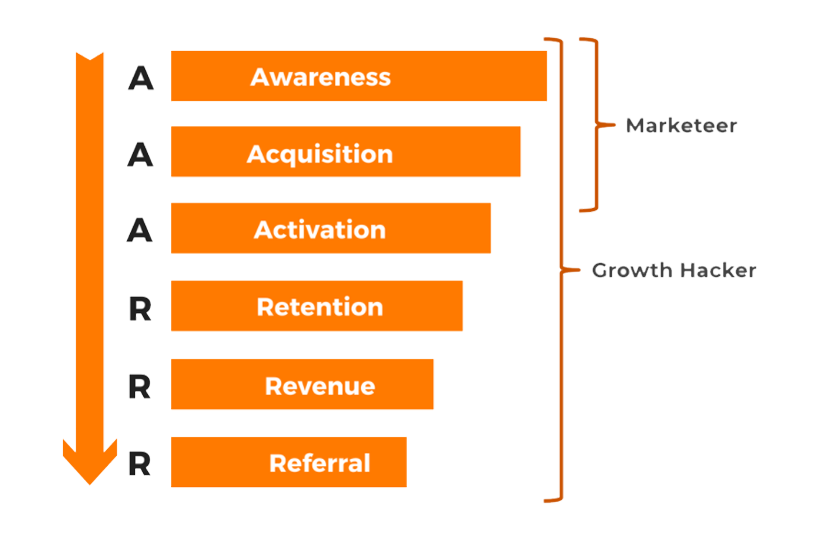
Don’t they fit perfectly?
Growth hackers listen deeply to users — The overarching aim of growth is to know your customers, know your product, and find the clearest way to get the two together.
This means that you may need to set up programs to analyze your online users, survey your current customers, or reach out through your various social channels.
Beyond acceptance, as part of the entire growth marketing arsenal of tricks, you can usually see viral content, user experience, design, email messaging, and surprising integrations and collaborations, but, if you are a small business you may not have the time to deal with all that, right?
Yes I don’t have the time to deal with all of that, I need fast and proven results at reduced expenses
Why is growth hacking also relevant to large companies?
Many businesses see growth hacking as the ideal tactic for the 21st century, so you need to be agile to escape competitors, must be able to take risks, and be data-driven if you don't want to waste thousands of Euros on the basis of gut instinct.
Grow With Ward states that for every 7 companies looking for a growth hacker, there is 1 growth hacker available who has the necessary knowledge and skills.

4. THE IMPORTANCE OF GROWTH HACKING IN 2020
Originally, growth hacking was born because companies wanted big returns, with little investment. But…Who doesn’t want that?
The concept of Growth Hacking has been around for many years now, in the following infographic we can see the popularity of growth hacking since 2004, and you can see it has been exponentially growing since 2012 after Sean Ellis coined the term “growth hacking” in 2011.

Although this methodology in 2020 is a bit different, the future is about coming together, and people want brands to be part of that story, not mentioning that 2020 is a year of incredible social responsibility.
For companies to grow better, they will need to consider their perspectives and take a look at why they exist and get specific about the implications their existence has on the rest of the world and their communities.
The customer is smarter than ever.
This is what a growth hacking flywheel in 2020 would look like to me:

But all this is just information, let’s review the first case-study of growth hacking from a current corporation that has used this methodology to grow exponentially;
4. (REAL) EXAMPLES OF GROWTH HACKING
When Hotmail (Currently known as Outlook) e-mail service was launched on 4 July 1996, nobody knew the words "growth hacking." However, the ingenious marketing ploy of Sabeer Bhatia and Jack Smith goes down in history as the first growth hack. And so Hotmail’s founders were discussing with investors about the company structures. The debate centered on how the business could easily target potential customers without a large marketing budget.
The outcome of the brainstorming session was a single line at the end of each email sent via Hotmail: "PS: I love you. Get your free e-mail with Hotmail." If you clicked on the "Hotmail" blue link, you were redirected to the registration page. There you will get all the necessary details about Hotmail's offer. In addition, you were given the ability to immediately create your own free e-mail account. (That was not the norm back in the days.)

While they had hit the first 1 million-user mark within the first 6 months of the business, it took them only 5 weeks to surpass the 2nd Million, thanks to that “simple” growth hack.
When Microsoft took over Hotmail for US$400 million just under a year later, the site already had 12 million users.
How do you start Growth Hacking?
If you're looking to take your company to a new exponential level of growth, reach out to us to discuss how we can help you get to the next level in sales, marketing, service, and technology.
I don't usually meet people for free, but because you've taken the time to read this article, I'd love to give you a free 1-hour consultation on your buyer's journey and growth hacking strategy at no cost.
My calendar is limited, so schedule your time today, before I book the rest of my available slots for this year.

DID THIS POST ANSWER YOUR QUESTIONS ABOUT GROWTH HACKING?
Have you got still questions? Do you need a Growth Hacker?
I'd love the opportunity to connect with you via Zoom to talk about what's working well at your company; relating to growth for sales, marketing, services, and technology.



Great post!